ServicesTPO Roofing
TPO Roofing in New Palestine
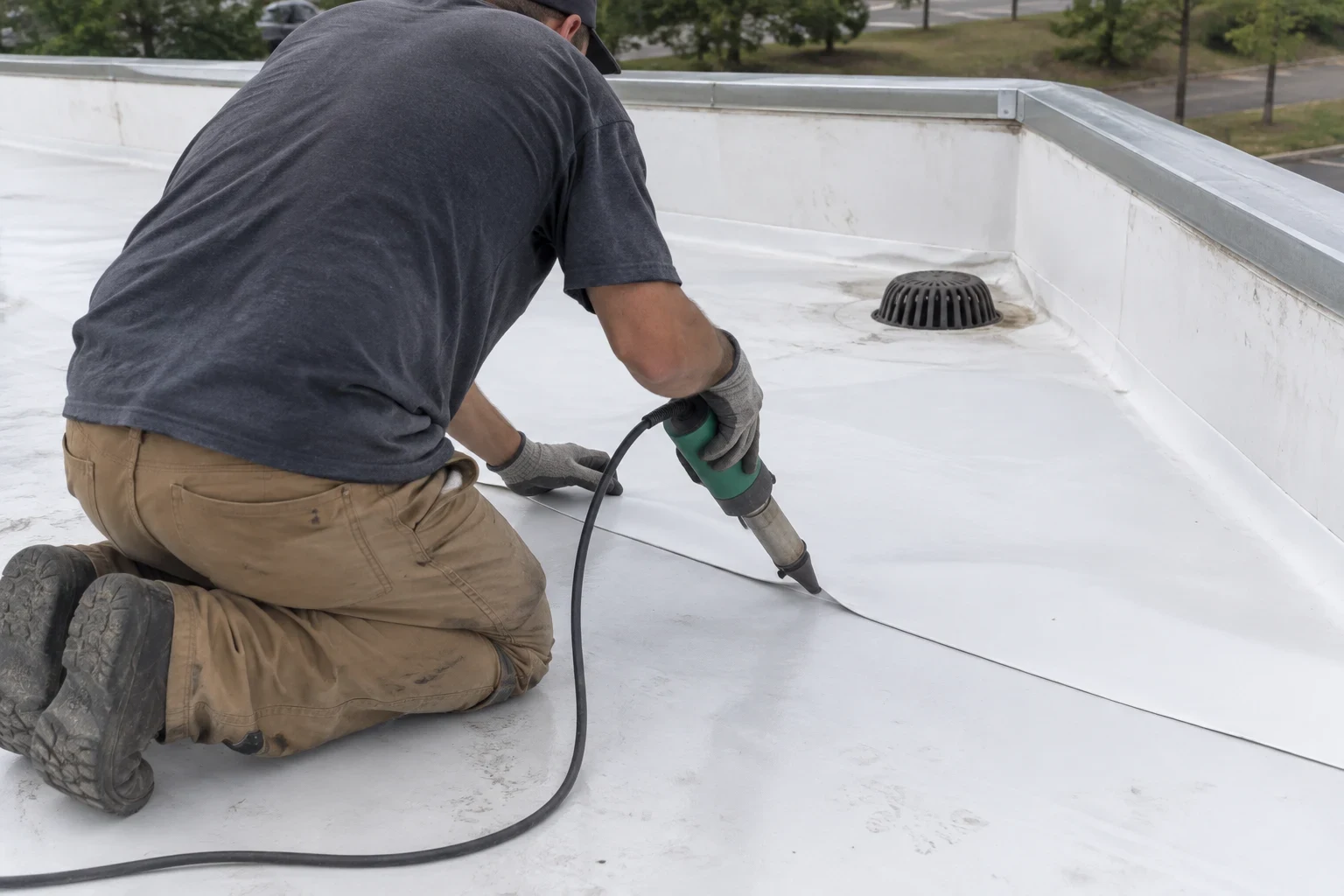
Flat and low-slope roof sections need a different material than shingles. We install TPO, a white single-ply membrane with heat-welded seams, over porches, additions and garages. We photograph the old roof, the deck and the finished seams so you see exactly what you paid for.
What TPO Is and When It Makes Sense
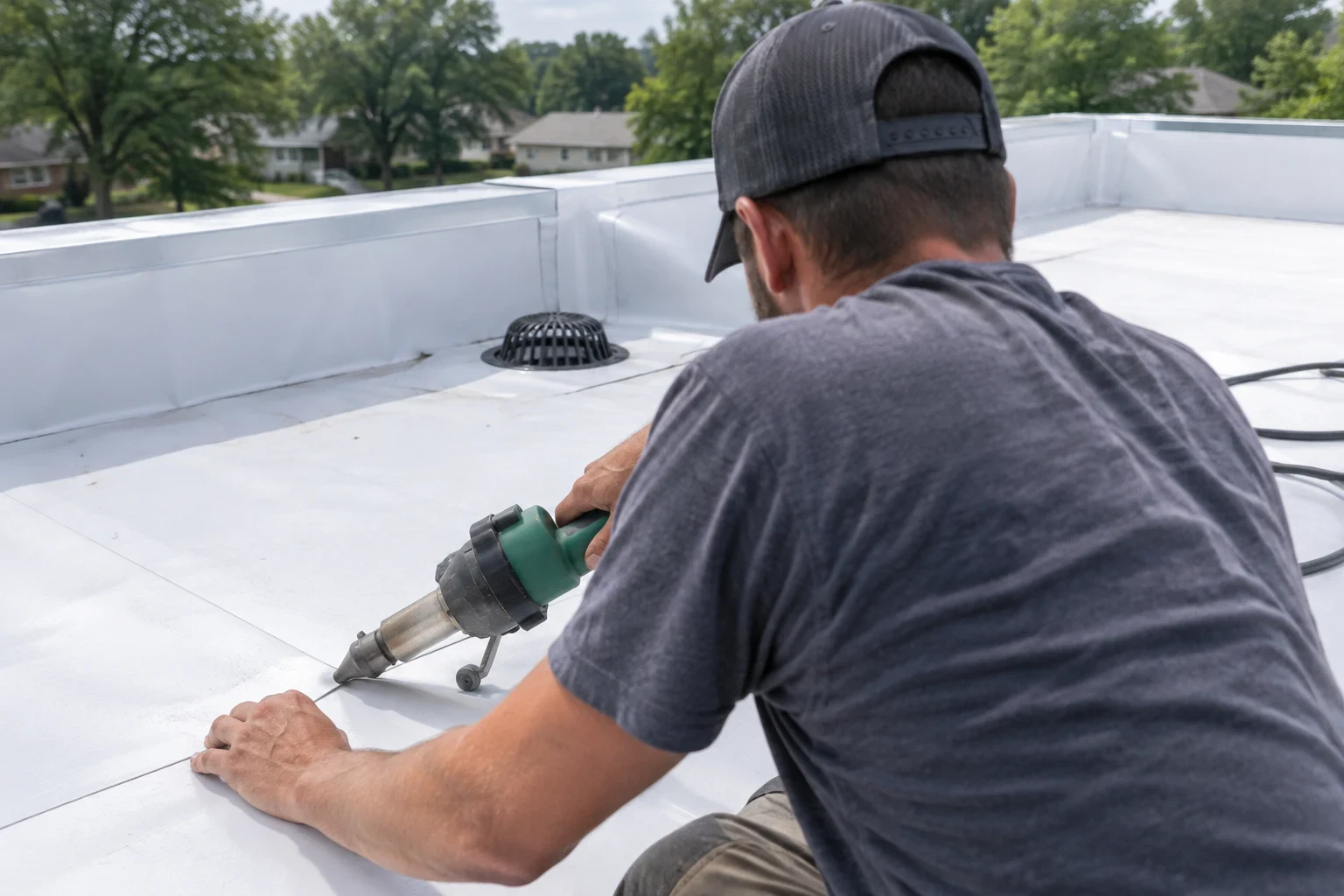
Shingles shed water by overlapping, so they need a steep enough pitch to work. On a back porch, a sunroom addition or a garage with a nearly flat roof, water sits longer and finds its way under shingles or old rolled roofing. TPO solves that. It is a continuous sheet, and where two sheets meet we melt them together with hot air so the seam becomes one piece of membrane.
The white surface reflects summer sun, which helps a room under a low roof stay cooler. It also stays flexible through Indiana winters, when freeze and thaw cycles crack older asphalt-based flat roofs.
If your main roof is steep and the flat section is small, TPO often pairs with a shingle roof on the rest of your home. We will tell you plainly whether TPO is the right fit or whether a repair to what you have is enough.
What a TPO Roof From Us Includes
- Tear-off and deck check
- We remove the old rolled roofing, modified bitumen or rubber down to the deck. Then we show you the boards and replace any that are soft or rotted before anything new goes on.
- Insulation board and drainage
- A layer of rigid insulation board goes down first. Where water has been pooling, we can use tapered board to give the roof enough slope to drain toward the edge or gutter.
- Heat-welded seams
- Every seam is welded with a hot-air tool and probed by hand afterward to find any gap before we call it done.
- Wall and edge flashing
- Where a low roof meets a wall of your home, the membrane runs up the wall and is sealed under a termination bar. New edge metal finishes the perimeter so wind cannot lift the sheet.
- Cleanup and a photo record
- We sweep for nails, haul away the old roofing and send you the before, during and after record of the job to keep with your house papers.
Signs Your Low-Slope Roof Needs Attention
Water that sits for days
Puddles that remain two days after rain mean the roof is not draining. Standing water speeds up wear and finds every weak spot.
Blisters and cracks
Bubbles, alligator-style cracking or split seams on rolled or asphalt flat roofing usually mean the material has reached the end of its life.
Stains on the ceiling below
A brown ring on a porch ceiling or in a sunroom often traces back to a failed seam or flashing where the low roof meets the house.
Shingles on a too-flat pitch
Some porches and additions were shingled even though the slope is too shallow. Leaks there tend to come back after every patch.
Soft spots underfoot
If the roof feels spongy when someone walks on it, the deck underneath may be wet. That is worth checking before winter.
How a TPO Job Goes
- 1
Free inspection
We look at the low-slope section, check drainage and the deck from above and below where we can, and photograph what we find. You get the pictures and a clear explanation, not a sales pitch.
- 2
A written estimate
We lay out the work line by line, including how much decking might need replacing and whether tapered insulation is needed. We pull the permit where your town requires one.
- 3
Install day
Most residential TPO sections are finished in a day or two. We protect your walls, windows and landscaping, tear off, repair the deck, then install insulation and membrane, documenting each stage as we go.
- 4
Final walk-through
We check every weld and flashing detail, clean up, and go over the photos with you so you know what is on your roof.
What Affects the Cost of a TPO Roof
Two things move the price most: what we find under the old roofing, and how much prep the section needs before the membrane goes down. Your written estimate lists each part of the job separately, with photos of the deck and drainage behind it, so nothing on the final bill catches you off guard. If paying for it all at once is a stretch, ask us about financing.
- Size and shape
- Square footage matters, but so do corners, skylights, vents and wall connections. Each one needs its own flashing detail.
- Condition of the deck
- Rotted boards from a long-running leak have to be replaced. We point them out to you before the work goes forward.
- Layers to remove
- Some flat roofs have two or three old layers stacked up. More layers mean more labor and disposal.
- Drainage fixes
- Tapered insulation to stop ponding adds material, and new edge metal or a gutter tie-in may be part of the job.
TPO Roofing Questions
Something not covered here? (317) 961-3289
Can TPO go on a house, or is it just for commercial buildings?
It works well on homes. Any part of your home with a low pitch, such as a porch roof, a rear addition or an attached garage, is a good candidate. The rest of the roof can stay shingle or metal.
Will a white roof look odd next to my shingles?
Most low-slope sections are hard to see from the ground, so the color rarely shows. If yours is visible, we can talk through how it will look before you decide.
How does TPO hold up to snow and ice?
The membrane stays flexible in cold weather, and the welded seams do not rely on adhesive that can let go in a freeze. Good drainage matters most, so melting snow runs off instead of refreezing in puddles.
Can you just patch my flat roof instead?
Sometimes, yes. If the problem is one failed seam or a flashing spot and the rest is sound, roof repair may be the better choice. We show you photos of the condition and give you an honest answer either way.
Do I need to be home on install day?
Not for the whole job. We like to say hello when the crew pulls in and walk the finished roof with you at the end. If you have work or errands in between, the photos we take at each stage let you see exactly what happened while you were out.
Find Out What Your Low Roof Needs
We will look at your porch, addition or garage roof, show you what we find and tell you whether TPO, a repair or nothing at all makes sense.