ServicesRoof Inspections
Roof Inspections in New Palestine
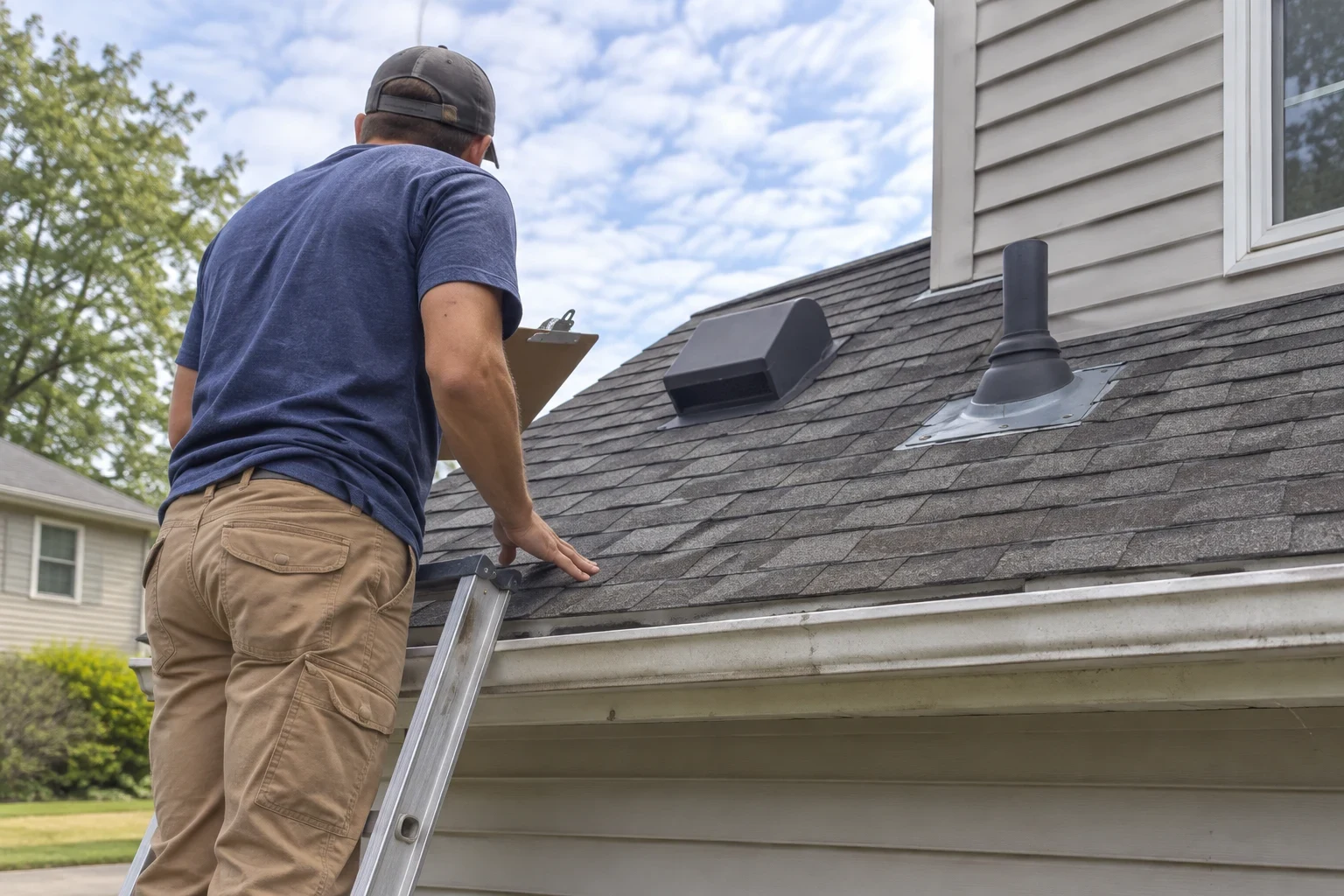
We walk your roof, check the attic and look at every spot where water likes to get in. Then we sit down with you, show you the pictures and tell you plainly what is fine, what needs watching and what needs work.
Catch roof trouble while it is still a small fix
Leaks rarely announce themselves early. One shingle tab that lifted in a windstorm, a pipe boot that split in the sun or a strip of flashing that worked loose can feed water into your home for a season before anything shows indoors. A careful inspection spots those weak points while the repair is still minor.
You never have to climb a ladder to know what is up there. We take pictures as we work and go over them with you afterward. When the roof is in good shape, we say so and leave it at that. When something needs work, you see the problem, hear why it matters and get a written estimate you can think over.
Central Indiana winters bring repeated freeze-and-thaw cycles, which pry at flashing and shingle seals, so a check each spring or fall is a sensible habit for your home.
What we look at on your roof and in your attic
- The roof surface
- We check for shingles that are missing, creased or curled, bare spots where granules have worn away, soft areas and hail bruises. On metal or TPO roofs we look closely at fasteners, seams and the membrane itself.
- Flashing around every opening
- Most leaks start where the roof meets something else: chimneys, skylights, walls and valleys. We inspect the flashing and sealant at each of those, plus pipe boots and exhaust vents.
- Attic, decking and ventilation
- Inside the attic we look for wet insulation, stained boards, specks of daylight and any sign of mold. Poor airflow ages a roof before its time, so we also check that intake and exhaust vents are doing their job.
- Gutters and downspouts
- Gutters packed with leaves or pulling away from the fascia let water back up beneath the roof edge. We look for loose hangers, stains where water has spilled over and downspouts that drain right beside your foundation.
- Photos and notes to keep
- You receive the pictures with a short, plain-language summary of our findings. Hang on to it for future planning, a home sale or a talk with your insurance company.
When it makes sense to have your roof checked
A strong storm came through
Hail and high winds can hurt a roof in ways you cannot see from the ground. An inspection shortly afterward captures the damage while it is easy to document.
Water marks inside
Brown rings on the ceiling or paint that bubbles on a wall usually mean water has been getting in for a while. It tends to travel along rafters and decking first, so the real entry point can be well above the stain.
Grit collecting in the gutters
As shingles age they lose the granules that shield them from the sun. Finding a thick layer of that grit in your gutters or by the downspouts tells you the shingles are wearing down.
Your roof is around 15 years old
Plenty of asphalt roofs begin to show wear about then. An inspection tells you if there is good life left or if it is time to budget for the next roof.
A home sale is coming up
Photos of the roof's condition give buyer and seller the same facts to work from before closing day.
Ice built up at the eaves
Heavy ice along the roof edge can push meltwater up under the shingles. It is often a sign that attic ventilation or insulation needs attention.
The inspection is free. Here is what shapes a repair estimate.
We do not charge to look at your roof. If we find something worth fixing, your estimate is built from what is actually up there rather than a set package. Knowing what drives that number makes the estimate much easier to read.
How far the damage reaches
Swapping out a handful of wind-torn shingles or a single pipe boot is a modest job. Hail bruising across every slope, or shingles worn thin from end to end, may mean roof replacement is the better use of your money.
What sits below the shingles
Soft or rotted decking stays hidden until the old shingles come off. If the attic or the feel of the roof underfoot hints at it, we mention it before any work starts so the possibility is already on the table.
Pitch and how easy it is to reach
A steep roof, or tight spots beside trees and additions, calls for extra safety gear and more hours on the job.
The material on your roof
Fixes on metal roofing or TPO roofing call for different parts and techniques than asphalt shingles, and that shifts both labor and material costs.
Insurance claims and financing
When a storm caused the damage, we work with homeowners and insurance companies on storm damage claims. For bigger repairs or a new roof, financing is available too.
What happens on inspection day
- 1
A short call to pick a day
Let us know about any leaks, stains or storm worries, or just that you want a checkup, and we find a day that suits you. Nobody needs to follow us onto the roof or up into the attic.
- 2
We inspect outside and in
We check the roof surface, flashing and gutters, then the attic if you are comfortable with that. Most homes take about an hour, depending on size and pitch.
- 3
We walk you through the photos
Before we leave, we go over what we found, picture by picture. We separate problems that need fixing now from things that can simply be watched.
- 4
You get a written estimate if work is needed
Any recommended work comes as a line-item estimate. There is no pressure to decide on the spot, and plenty of inspections end with no work needed at all.
Common questions about roof inspections
Do you charge anything for the inspection?
No. It costs you nothing, and you are under no obligation to hire us afterward. The photos and our notes are yours to keep either way.
Does someone need to be at the house?
It is best if you can be around when we finish, so we can look at the pictures together. If you would like the attic checked, someone has to be there to let us inside.
How often should my roof be inspected?
Most homes do well with a look every year or two. Book an extra one after any heavy hail or strong wind. Once a roof is getting older, a yearly check is a smart habit.
Are you going to push me toward a new roof?
No. A lot of our inspections end with a minor repair, or with nothing to do at all. Because you see the photos yourself, you can judge the roof's condition without taking our word for it.
Will the inspection help if I file an insurance claim?
Dated photos of storm damage give your claim solid support. We walk you through what we found and work with you and your insurance company, though the adjuster is the one who decides what is covered.
Find out where your roof stands
A quick phone call gets us out to your home in New Palestine or nearby towns like Greenfield and Cumberland. You will see every picture and get a straight answer.