ServicesShingle Roofing
Shingle Roofing in New Palestine, IN
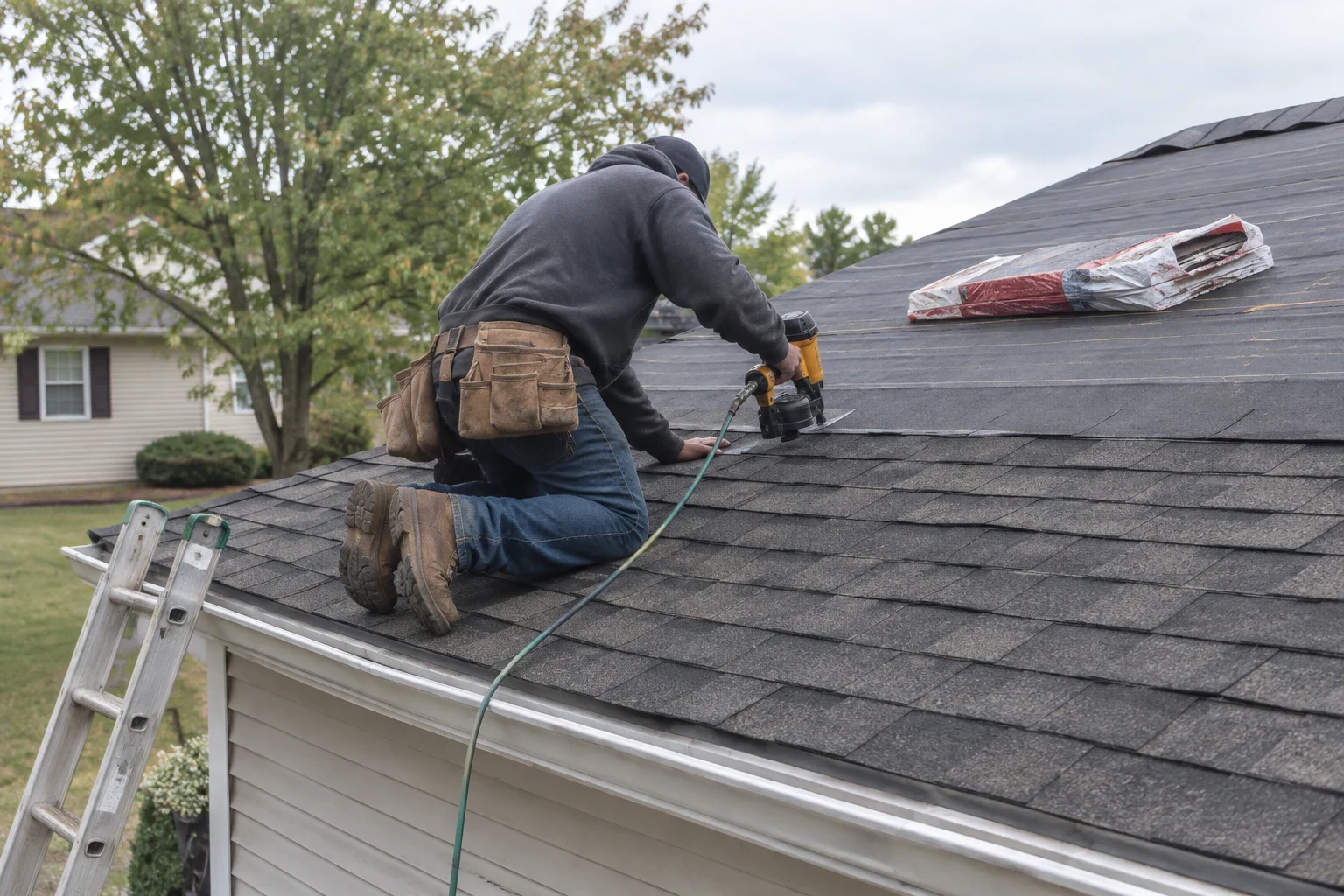
We install new asphalt shingle roofs for homeowners in New Palestine and nearby towns. Before work starts, we take photos of your roof. Then we keep documenting through tear-off, decking, underlayment and the final ridge cap, so you see every layer.
A Shingle Roof You Can Actually See Inside
Asphalt shingles cover most homes in central Indiana. Put on correctly, they hold up through freeze-thaw winters, come in colors that suit nearly any house and cost less than metal. What decides how long they last is mostly hidden: the decking, the membranes beneath and how carefully each shingle is nailed.
Once shingles are down, you can't see the deck, the ice barrier or most of the flashing. So we photograph each of those layers before it's covered. You keep a record of the boards we replaced, where the membrane runs and how the valleys were finished. That record helps if you sell your home or ever need to file a claim.
If you only need a few shingles replaced, our Roof Repair page covers that work. This page is about new shingle roofs and full reshingling.
What Goes Into a New Shingle Roof
- Full removal, not a layover
- Old shingles and felt come off completely rather than getting buried under a new layer. With the boards bare, we can spot soft, delaminated or rotted sections, show them to you and replace them.
- Ice and water barrier where it counts
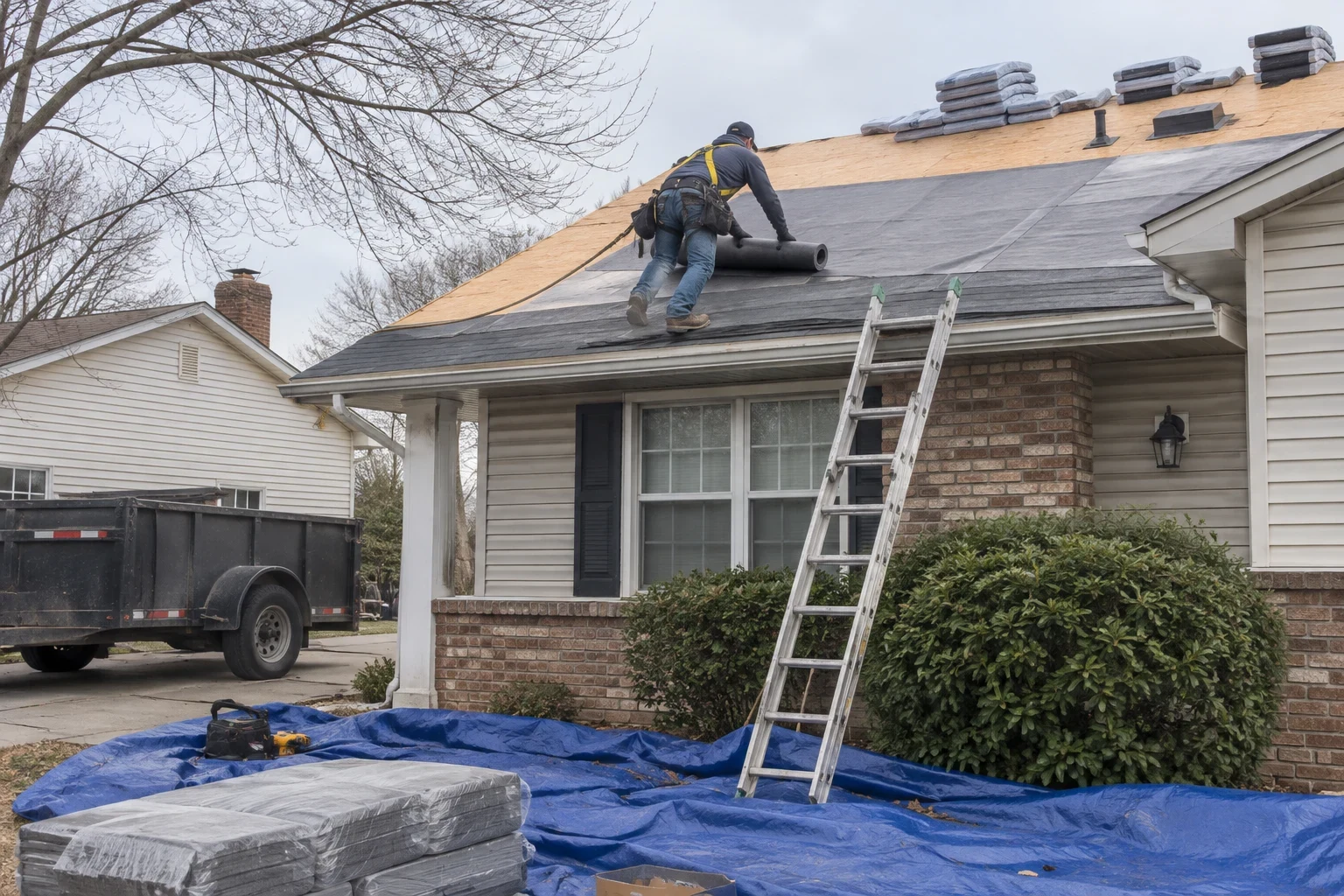
- Self-adhering membrane goes along the eaves, in the valleys and around chimneys and pipes. Those are the spots where melting snow backs up. Synthetic underlayment covers the rest of the deck.
- Drip edge, starter strip and correct nailing
- Metal drip edge lines the eaves and rakes. A starter course seals the first row, and every nail lands in the manufacturer's nailing zone. These small details keep shingles in place when strong spring winds come through.
- New flashing and pipe boots
- We replace step flashing, chimney flashing and rubber pipe boots instead of reusing worn pieces. Old flashing under new shingles is one of the most common causes of early leaks.
- Attic ventilation check
- We look at the intake vents and the ridge vent together. An attic that can't breathe bakes shingles from below in summer and helps ice dams form in winter.
- Cleanup and your picture record
- We run a magnetic sweep for nails across the yard and driveway and clear roofing debris from the gutters. Then we hand over the pictures from each stage of the job.
Signs Your Shingles Are Near the End
Granules in the gutters
Those sandy bits protect the asphalt from the sun. Once they wash off in quantity, shingles dry out and wear quickly.
Curling, cupping or cracking
Edges that lift or shingles that crack across the middle no longer seal. Wind gets under them and pulls them loose.
Shingles missing after a storm
One or two can be repaired. If they keep coming off in different spots, the sealant strips have likely failed across the roof.
Ice dams and ceiling stains
Ridges of ice at the eaves or brown rings on an upstairs ceiling mean water is getting past the shingles. Often the underlayment or ventilation is part of the problem too.
A roof full of patches
When an older roof has mismatched repairs in several places, reshingling usually costs less over time than chasing the next leak.
How a Shingle Roof Job Runs
- 1
Free roof inspection
We go up on your roof, check the shingles, flashing and attic, and take photos of what we find. Then we walk you through the pictures and tell you plainly whether repair or replacement makes more sense.
- 2
Written estimate and shingle choice
You get a line-item estimate that spells out materials, deck repair and cleanup. We help you choose a shingle line and color, and we explain the financing option if you'd like to spread out the cost.
- 3
Prep and tear-off
We cover plants, protect your AC unit and park the debris trailer where it won't block your day. Then the old roof comes off and we document the bare deck.
- 4
Installation
Decking repairs, membrane, underlayment, flashing, shingles and ridge vent go on in that order, and we capture each stage before the next one covers it. Most homes are done in one to two days, depending on size and weather.
- 5
Cleanup and walk-through
After the nail sweep, we walk the property with you and go over the final pictures. Any question you have gets answered before we leave.
What Shapes the Price of a Shingle Roof
Every roof prices out a little differently, so we don't give a number until we've been up on yours. Your estimate lists materials, decking work, flashing and cleanup as separate lines, so you can see where each part of the cost comes from. If paying over time would help, we offer financing.
- Size and pitch
- A bigger roof takes more bundles, more underlayment and more hours. On a steep pitch the crew works from roof jacks and harnesses, which slows the pace and adds to the labor.
- Old layers and decking
- Two layers of old shingles take longer to strip and haul away than one. Nobody can count rotted boards until the deck is bare, so we photograph each one and show you before it's added to the bill.
- Shingle line
- Standard architectural shingles, heavier designer lines and impact-rated shingles each carry their own price. We'll tell you plainly what you gain with each step up, and you won't hear a hard sell for the most expensive option.
- Roof shape and details
- Valleys, dormers, chimneys and skylights each call for extra flashing and careful cuts. A plain gable roof goes up faster than one with lots of angles and openings.
Shingle Roofing Questions
Something not covered here? (317) 961-3289
Should I choose architectural or 3-tab shingles?
Most of the time we point people toward architectural shingles. They're thicker, stand up better to wind and give the roof a more dimensional look. Three-tab shingles are thinner and flatter, and many manufacturers now make fewer of them. We bring samples of both so you can hold them side by side.
Can you put new shingles over my old roof?
We'd much rather do a full tear-off. A second layer covers up decking problems, puts extra weight on the framing and tends to cut the new roof's life short. Stripping to the deck also means we can photograph exactly what your new shingles will sit on.
What happens if you find rotten decking?
We pause the work, photograph the damaged boards and show you before we replace them. How deck repair is billed is already spelled out in your estimate, so you know how the final number is figured.
Does homeowners insurance cover a new shingle roof?
It usually depends on the cause. Hail and wind damage are often covered, while ordinary wear from age generally is not. We work with homeowners and insurance companies on storm damage claims, and the photos from our inspection give your adjuster a clear picture of the damage. You'll find more on our Storm Damage Repair page.
Do I need to be home during the install?
You don't have to stay for the whole job. It helps to catch you in the morning before we start, and we'd like to go over the finished roof with you once we're done. Tear-off is loud, so plenty of people run errands or head to work during that stretch.
See What's on Your Roof Before You Decide
We'll inspect your shingles, take photos and show you what we found, with no pressure either way. Then you can decide on your own time.